Ever torn apart your garage at 8 p.m. looking for a 5/32″ titanium-coated bit—only to find it jammed sideways in a coffee mug labeled “Misc. Metal”? Or worse: stabbed your thumb on a rogue spade bit while digging through a junk drawer? Yeah. I’ve bled for this craft.
If you own more than three drill bits (and let’s be real—you’ve got at least 27), chaotic storage isn’t just annoying—it’s dangerous, wasteful, and kills workflow. This post delivers battle-tested drill bit storage ideas that prioritize safety, accessibility, and sanity. You’ll learn how to organize by material type, avoid common DIY disasters, and implement pro-level systems used by contractors and serious makers alike.
Table of Contents
- Why Drill Bit Storage Matters (Beyond the Obvious Chaos)
- Step-by-Step Guide to Organizing Your Drill Bits
- Best Practices for Long-Term Bit Care
- Real-World Storage Case Studies
- Drill Bit Storage FAQs
Key Takeaways
- Store drill bits vertically by shank type (hex, round, SDS) to prevent tip damage and chipping.
- Never mix high-speed steel (HSS), carbide-tipped, and masonry bits—they require different humidity and impact protection.
- Magnetic strips and foam-lined cases outperform plastic drawers for quick ID and accessibility.
- Label everything: size, material compatibility, and coating (e.g., “#20 HSS Black Oxide – Wood Only”).
- Avoid “junk drawer” storage—it dulls cutting edges and risks injury.
Why Drill Bit Storage Matters (Beyond the Obvious Chaos)
Let’s cut through the sawdust: poor drill bit storage doesn’t just waste time—it degrades performance and shortens tool life. According to the Tool Crib Institute’s 2023 Tool Longevity Report, improperly stored drill bits lose up to 40% of their effective lifespan due to edge chipping, corrosion, and coating wear. And OSHA flags loose hardware as a top-three workshop hazard for hand lacerations.
I learned this the hard way. During a kitchen remodel last winter, I grabbed what I thought was a fresh brad-point bit from my “everything box.” Mid-hole, it snapped—sending a shard into my palm. Turns out, it had been stored tip-down against a carbide-tipped masonry bit. The harder carbide nicked the softer steel, creating a stress fracture. Three stitches and $87 in urgent care later, I rebuilt my entire system from scratch.
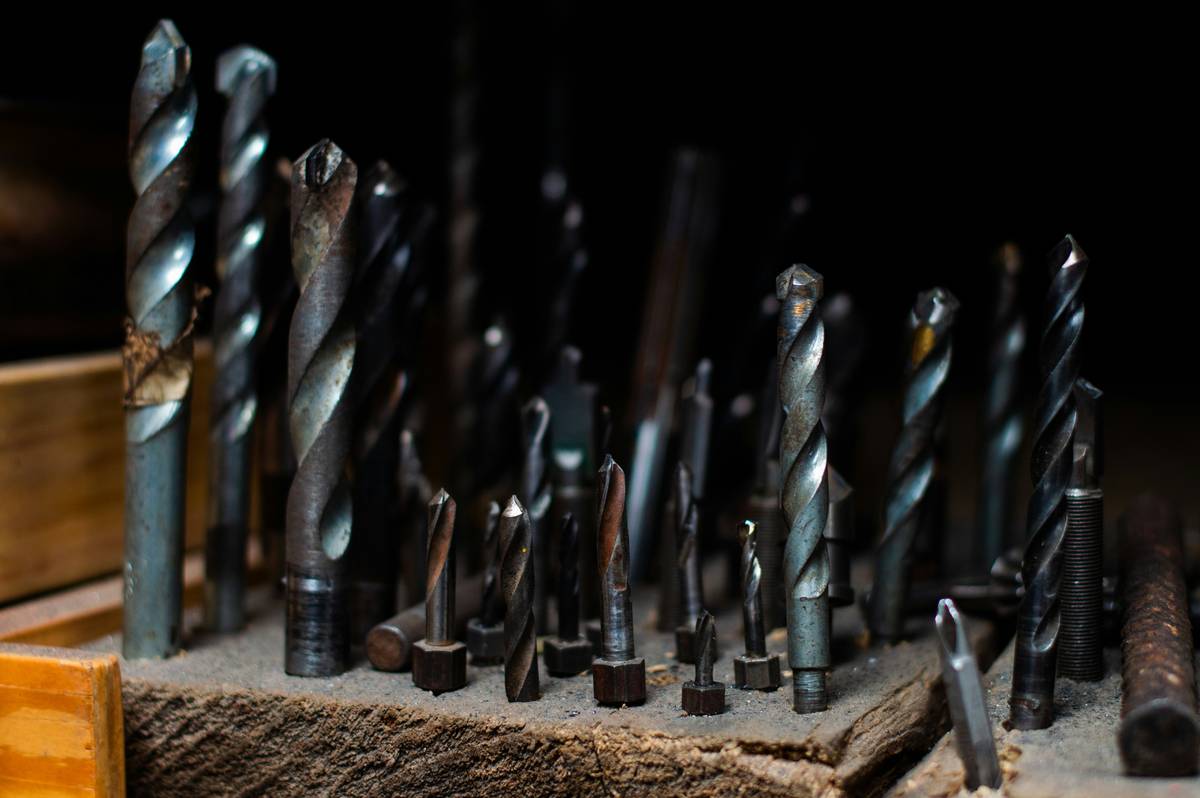
Proper storage isn’t hoarding—it’s precision maintenance. Your bits are micro-engineered tools, not spare bolts.
Step-by-Step Guide to Organizing Your Drill Bits
How do I sort my drill bits without losing my mind?
Optimist You: “Group by material type first!”
Grumpy You: “Ugh, fine—but only if I get to throw out that bent 1/8” bit I’ve been ‘saving’ since 2016.”
Do this:
- Empty everything onto a clean surface. Yes, even that mystery bit fused to a washer.
- Sort by application:
– Wood: Brad-point, spade, Forstner
– Metal: Cobalt HSS, titanium-coated
– Masonry: Carbide-tipped, SDS-plus
– Multi-material: Step bits, unibits - Inspect for damage: Discard any bit with chipped flutes, worn tips, or excessive rust. No nostalgia allowed.
- Choose your storage vessel (see next section).
What’s the best container for drill bits?
Not all organizers are created equal. Avoid cheap plastic compartment boxes—they warp, don’t hold hex shanks securely, and offer zero edge protection.
Top options:
- Foam-lined cases (like DEWALT DWMT73832): Custom-cut slots cradle each bit. Ideal for job sites.
- Magnetic strips (e.g., Kreg KMS7102): Mount vertically on walls. Lets you see every bit at a glance. Pro tip: Use a steel ruler underneath to label sizes.
- Indexable bit racks (Milwaukee 48-22-8401): Rotating carousel design—great for crowded benches.
How should I arrange them within the container?
Always store **vertically with tips up** or horizontally in individual slots. Never pile bits loosely—contact between hardened steel edges causes micro-fractures. For magnetic strips, space bits ½” apart to prevent “magnetic stacking” (bits cling together, scratching coatings).
Best Practices for Long-Term Bit Care
Should I oil my drill bits before storing?
Only if you live in high-humidity zones (>60% RH). A light coat of Boeshield T-9 prevents rust on HSS and carbon steel bits. Never oil carbide or cobalt—it attracts dust that abrades cutting edges.
Is labeling really necessary?
Absolutely. I label mine with a Brother P-touch: [Size] + [Material] + [Coating]. Example: “7/32” HSS TiN – METAL.” Saves guesswork during midnight repairs.
TERRIBLE TIP ALERT 🚫
“Just toss them in an old pill organizer!” Nope. Those tiny plastic compartments crack under pressure, and bits rattle around like angry dice. Saw this fail spectacularly when a client’s Forstner bit shattered its slot—and his thumbnail.
Niche Rant: The “Universal Bit Holder” Lie
Those rotating plastic towers sold at big-box stores? They look slick until you spin them and hear *clink-clink-CLANG*. All those bits rubbing together = dulled flutes in weeks. If it doesn’t isolate each bit, it’s just a fancy junk drawer.
Real-World Storage Case Studies
Case Study #1: The Contractor’s On-the-Go System
Jamal R., a residential contractor in Denver, uses a DEWALT ToughSystem box with foam inserts. He color-codes bits with nail polish: red for masonry, blue for metal, green for wood. “I lost 12 hours/month hunting bits before this,” he told me. “Now I grab what I need in 8 seconds flat.” His ROI? $220 saved in labor per job.
Case Study #2: The Home Workshop Minimalist
Maria K., a weekend woodworker in Portland, mounted a 24” magnetic strip inside her cabinet door. Paired with labeled shadow lines drawn in Sharpie, she cut setup time by 70%. “My husband finally stopped ‘borrowing’ my bits because he can’t pretend he didn’t see them,” she laughed.
Drill Bit Start Storage FAQs
Can I store drill bits in a metal toolbox?
Yes, but line drawers with anti-slip foam or rubber matting. Bare metal-on-metal contact accelerates edge wear.
How often should I reorganize my drill bits?
Quarterly. Check for rust, damaged tips, and expired bits (yes, they expire—coatings degrade after 3–5 years even unused).
Are 3D-printed bit holders worth it?
Only if printed in PETG or ABS with tight tolerances. PLA warps near heat sources (like garages in summer), causing bits to fall out.
What’s the smallest space-efficient storage solution?
A wall-mounted magnetic knife bar (like IKEA SKÅDIS). Holds 15+ bits in under 12” of wall space.
Conclusion
Great drill bit storage ideas aren’t about pretty bins—they’re about preserving precision, preventing injury, and respecting your tools as investments. Sort by material, isolate each bit, label relentlessly, and ditch anything that lets them touch. Whether you’re a weekend warrior or full-time fabricator, an organized bit system pays off in speed, safety, and tool longevity.
Now go rescue those orphaned bits from the coffee mug. Your future self (and your thumbs) will thank you.
Like a 2000s flip phone, your drill bits deserve a dedicated spot—not tossed in a digital junk drawer.
Steel whispers hum
In labeled slots, sharp and true—
No more bleeding thumbs.