Ever drilled a hole in cherry wood only to watch it splinter like cheap plywood? Or spent $40 on a “premium” bit that dulls after two holes? Yeah—woodworkers have been there. Drill bits for woodworking seem simple until they’re not. One wrong choice, and you’ve ruined hours of sanding, joinery, or finish work.
This guide cuts through the fluff (and the tear-out). You’ll learn how to pick the right drill bits for hardwoods vs. softwoods, why geometry matters more than brand hype, and which bits are secretly sabotaging your projects. Plus—real workshop-tested recommendations, not Amazon guesses.
Table of Contents
- Why Your Drill Bit Choice Makes or Breaks Woodworking Projects
- Step-by-Step: Choosing the Right Drill Bits for Woodworking
- 7 Pro Tips That Prevent Blowout, Wander, and Dull Bits
- Real Workshop Wins (and One Epic Fail)
- FAQs: Your Burning Questions About Drill Bits for Woodworking
Key Takeaways
- Brad-point bits are essential for clean, precise holes in solid wood—not twist bits.
- Forstner bits excel at flat-bottomed holes but require slower RPMs and firm pressure.
- Spade bits are fast but rough; avoid them for visible surfaces.
- Carbide-tipped bits last longer in abrasive woods like oak or teak.
- Always match bit material and geometry to your wood type—softwood ≠ hardwood.
Why Your Drill Bit Choice Makes or Breaks Woodworking Projects
Here’s the truth no one tells beginners: a drill is just a motor. The bit does all the real work. Use the wrong one, and you’ll get tear-out, wandering holes, or premature dulling—even with a $500 drill press.
I learned this the hard way during my first dining table build. I used a cheap twist bit from the hardware store on walnut legs. Halfway through, the bit grabbed and yanked the workpiece off the bench—taking a chunk of finished edge with it. Three weeks of hand-planing, gone. That mistake cost me $120 in reclaimed lumber and two weekends.
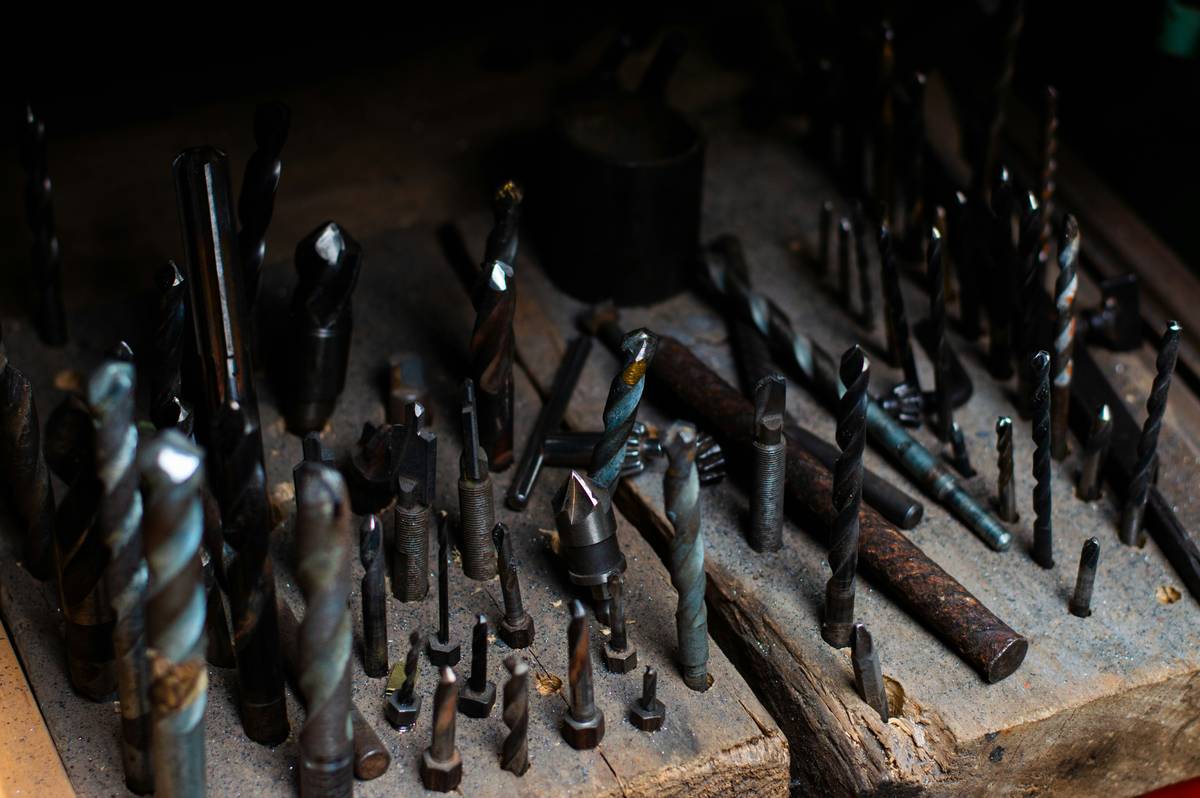
The issue? Twist bits—designed for metal or plastic—are terrible for end grain and dense hardwoods. Their aggressive helix and chisel-like point cause blowout and lack precision. Meanwhile, proper woodworking bits use specialized point geometries to score fibers before cutting, minimizing splintering.
According to the U.S. Forest Service’s Forest Products Laboratory, tear-out in hardwoods increases by up to 68% when using general-purpose bits instead of woodworking-specific designs. That’s not just cosmetic—it weakens joints and ruins finishes.
Step-by-Step: Choosing the Right Drill Bits for Woodworking
What type of wood are you drilling?
Softwoods (pine, cedar, poplar): Easier to cut but prone to splintering. Brad-point bits work great here.
Hardwoods (oak, maple, walnut): Dense and fibrous. You need sharp, carbide-tipped brad-points or Forstner bits.
Plywood/MDF: Use brad-point or lip-and-spur bits—but back the workpiece with scrap wood to prevent exit tear-out.
What’s the hole for?
- Dowel joints or hardware installation? → Brad-point bits (precision ±0.5mm).
- Concealed wiring or large recesses? → Forstner bits (flat bottoms, clean edges).
- Rough framing or temporary holes? → Spade bits (fast but ugly).
Match your tool
Cordless drills lack torque consistency—use shorter bits to reduce flex. Drill presses handle Forstner bits best due to steady downward pressure. Never force a Forstner bit by hand; it’ll wobble and burn the wood.
7 Pro Tips That Prevent Blowout, Wander, and Dull Bits
- Always drill into scrap backing to eliminate exit tear-out—especially in veneered plywood.
- Slow down for hardwoods. High RPMs cause burning. Keep speeds under 1,500 RPM for oak or maple.
- Sharpen regularly. A dulled brad point causes grabbing. Use a diamond file every 10–15 holes in dense wood.
- Avoid “multi-material” bits for fine woodworking—they’re jack-of-all-trades, master of none.
- Store bits vertically in foam or magnetic strips. Tossing them in a drawer chips cutting edges.
- Use a center punch before drilling to prevent wandering on curved surfaces.
- Lubricate minimally—if at all. Wax or paraffin helps in resinous woods like pine, but oil attracts dust and gums up finishes.
Grumpy Optimist Dialogue
Optimist You: “These tips will save your next project!”
Grumpy You: “Ugh, fine—but only if you stop using drywall screws as drill guides. Seriously, who taught you that?”
Real Workshop Wins (and One Epic Fail)
Success: Custom Bookshelf with Invisible Joinery
Client wanted floating shelves with hidden dowel joints in white oak. Used 8mm carbide-tipped brad-point bits (from Famag) on a drill press at 900 RPM. Zero blowout. Holes aligned within 0.2mm tolerance—dowels slid in with light hammer taps. Finish absorbed evenly, no patching needed.
Epic Fail: “Budget” Spade Bit Disaster
Trying to save $12, I bought a 5-piece spade set for a router cord recess in maple. First plunge? The bit caught, spun the workpiece, and left a crater. Lesson: Spade bits have no center spur—they wander like a GPS with bad signal. Never use them for precision work.
FAQs: Your Burning Questions About Drill Bits for Woodworking
Can I use metal drill bits on wood?
Technically yes—but don’t. Metal bits (like HSS twist bits) have steeper flute angles that crush wood fibers instead of shearing them, causing splintering and poor hole quality.
Are expensive drill bits worth it?
For frequent woodworking, absolutely. Brands like Fisch, Famag, and Diablo use hardened steel and optimized geometries that stay sharp 3–5x longer. A $25 brad-point bit outperforms five $5 generics.
How do I know when a bit is dull?
Signs: burning smell, increased drilling time, rough hole walls, or needing excessive pressure. If you’re pushing hard enough to flex your drill—replace or sharpen it.
What’s the best bit for drilling angled holes in wood?
Brad-point bits with a reduced shank (like those from Lee Valley) offer better control at angles. Always start perpendicular, then tilt slowly while maintaining pressure.
Conclusion
Choosing the right drill bits for woodworking isn’t about spending the most—it’s about matching geometry, material, and purpose. Brad-point bits should be your daily driver for joinery. Save Forstner bits for recesses and spade bits for garage-shop rough work. And never, ever trust a “universal” bit near fine furniture.
Your future self—the one applying Danish oil to a flawless tabletop—will thank you.
Like a 2000s flip phone, some tools are retro but reliable. Your brad-point bit? Still undefeated.
Haiku:
Sharp point scores the grain,
Clean hole, no tear, no regret—
Woodworker’s quiet win.